
Background
Access to clean drinking water is a fundamental human need, yet for unhoused individuals, it remains a daily struggle. Without permanent housing, people lack reliable access to tap water, refrigeration, or safe storage for beverages. Public water fountains are scarce, often poorly maintained, and sometimes deliberately removed from areas where unhoused populations congregate. The result is that many people experiencing homelessness face chronic dehydration, which compounds existing health challenges and creates new ones.
Modesto is home to approximately 1,603 unhoused individuals, representing 80% of the total homeless population in Stanislaus County. The Central Valley's extreme temperatures, with summers regularly exceeding 100°F, make hydration not just a matter of health but of survival.
Beyond hydration, unhoused individuals face significant barriers to maintaining basic hygiene. Limited access to showers, restrooms, and personal care products affects both physical health and dignity. Skin conditions, oral health problems, and minor injuries that would be easily treated in a home environment can escalate into serious medical issues without access to basic hygiene supplies.
Our Approach
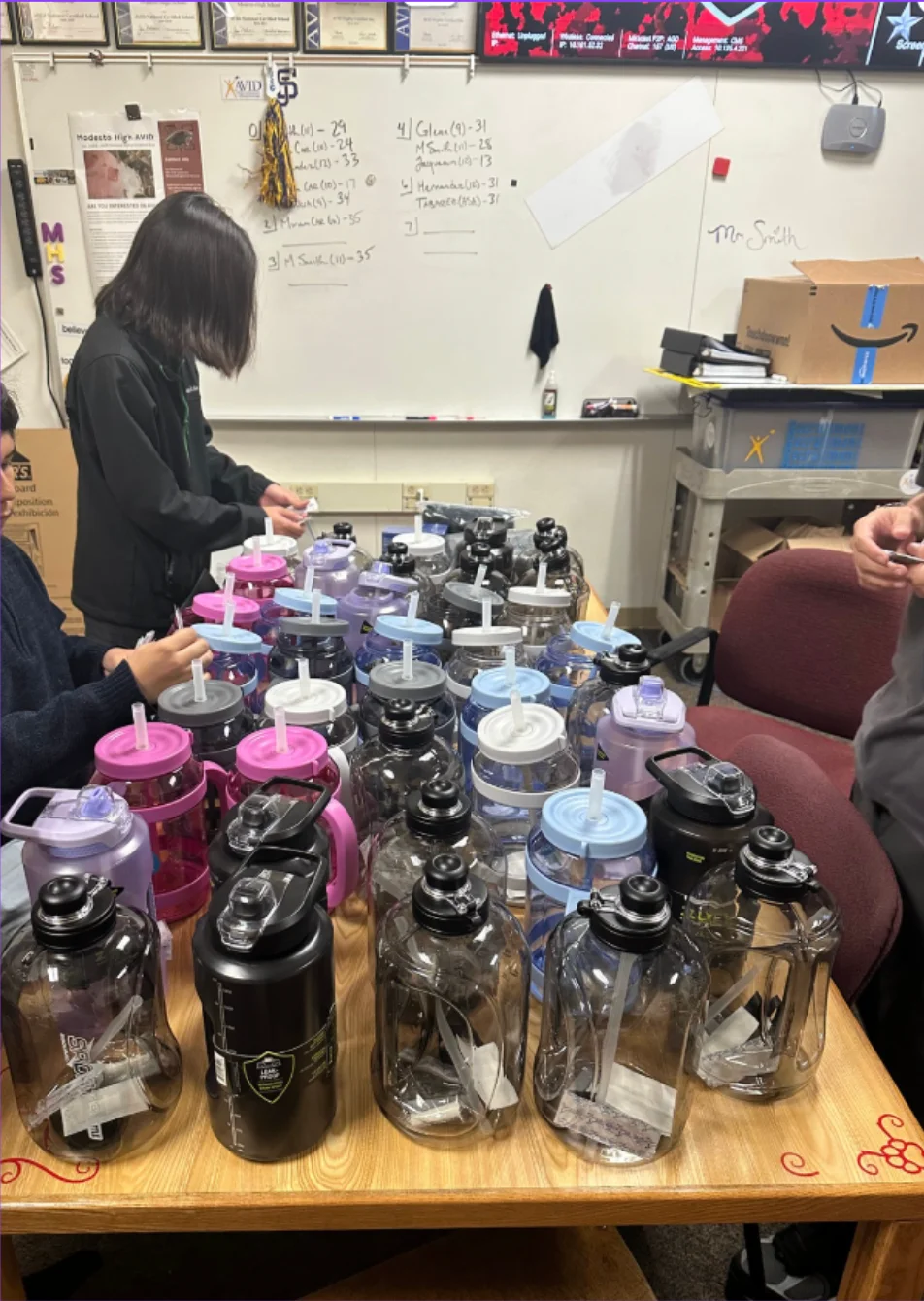
We assembled and distributed 40 care kits designed to address both hydration and basic hygiene needs. Rather than providing single-use water bottles that would need constant replacement, we chose 64-ounce reusable water bottles that recipients could refill at public water sources, shelters, or service organizations. This approach provides a sustainable solution that serves recipients long after the initial distribution.
Each care kit was assembled with the help of student volunteers from Modesto High School's CHIA (Community Health Initiative Association) club.
Every kit included:
- 64oz Reusable Water Bottle
- Mouthwash
- Warm Socks
- Moisturizing Lotion
- Adhesive Bandages
These items were selected because they address immediate needs while being practical for people without stable housing. The water bottles are durable and portable. Mouthwash supports oral hygiene when toothbrushing isn't possible. Socks are among the most requested items at shelters, providing warmth and preventing foot problems common among those who walk extensively. Lotion addresses skin issues caused by exposure to elements, and bandages allow for basic first aid.
Distribution and Partners
To ensure the kits reached people who would benefit most, we partnered with two established organizations that serve Modesto's unhoused community. The Modesto Shower & Laundry Shuttle, provides mobile hygiene services to unhoused individuals throughout the city. Modesto Family Promise works specifically with families experiencing homelessness, providing shelter, meals, and case management to help them transition to stable housing.
Kits were delivered to both partner locations on a Monday morning, timed to coincide with their regular service hours when clients would be present. The Shower & Laundry Shuttle location at 523 Martin Luther King Dr. received 20 kits, while Modesto Family Promise at 2301 Woodland Ave. received the remaining 20. Staff at each location distributed the kits directly to clients.
This distribution model, working through established service providers rather than conducting direct outreach, ensures that kits reach verified recipients and allows for follow-up support. Partner organizations can track which clients received kits and can provide additional resources or referrals as needed.
Looking Ahead
This distribution represents the beginning of Equity Heartbeats' ongoing commitment to supporting Modesto's unhoused population. We are exploring expanded partnerships with additional service providers, seasonal distributions timed to address weather-related needs, and more comprehensive care kits that could include additional hygiene and health items.
We recognize that care kits address symptoms rather than root causes of homelessness. However, we believe that meeting immediate needs is an essential complement to longer-term solutions. When someone has access to clean water and basic hygiene supplies, they are better positioned to engage with services that can help them find stable housing, employment, and healthcare. Dignity and basic comfort are not luxuries; they are foundations for recovery and stability.